
Editorial test publication: prepared with AI assistance for Arab:US. The linked test profile is not a real reporter.
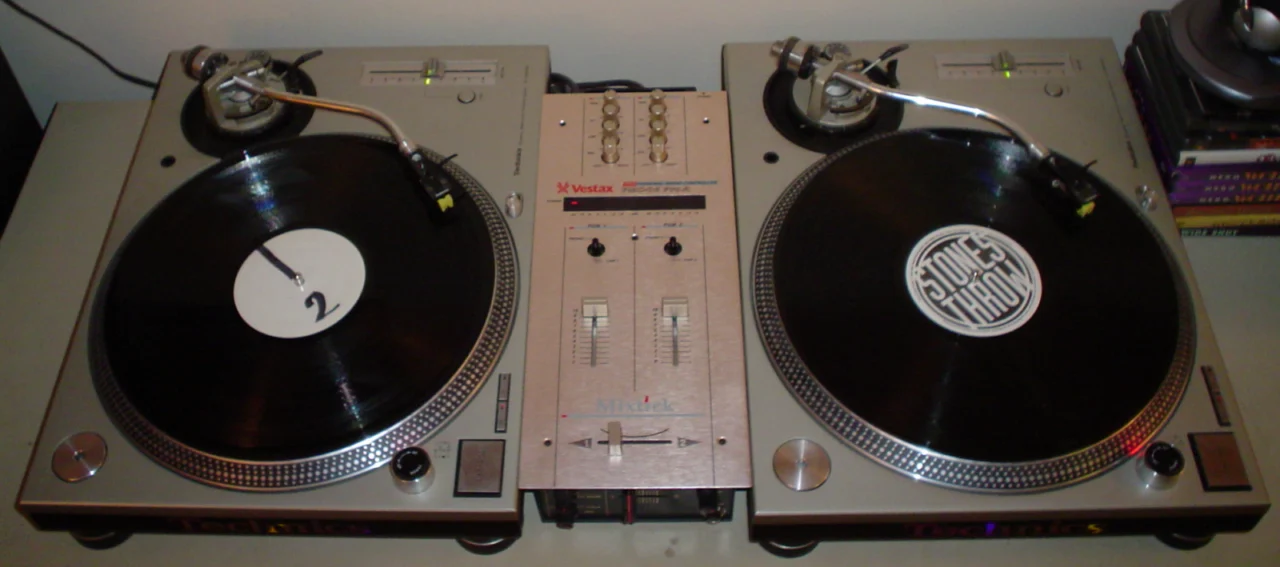
Archival/context photograph: Turntables and a DJ mixer in 2004; music activity context, not Nabala Cafe's equipment. Baskoner — Photo source · CC BY 3.0. No new edits. Archival/context photograph.

The Library of Congress National Jukebox provides access to historical sound recordings from its collections and contributing institutions. It offers an opportunity to hear older recorded performances while consulting the information that identifies them.
The catalog record is part of the experience. Before writing about a track, distinguish the performer, composer, recording date and any later release information. A title alone may not establish the language, origin or viewpoint of a performance.
For a family listening session, let participants describe what they hear before offering an interpretation. Ask which words are clear, which sounds are unfamiliar and what additional context would help. Keep memories prompted by the recording distinct from facts documented about it.
An archive can make a recording accessible without making every possible reuse unrestricted. Consult the item's rights information before copying audio into another publication. Linking to the institutional record also gives readers a way to check the description and explore the recording in its original archival setting.
Source and further reading: Library of Congress: National Jukebox